By: Sid Peddinti
In the world of personal finance, few phrases inspire more dread than “tax debt.” The letters IRS can feel like a scarlet letter on your balance sheet, and the natural human instinct is often to panic, or worse, to ignore the problem entirely. Neither is a sound financial strategy.
The truth is that the Internal Revenue Service is a sophisticated creditor, and like any good creditor, it has a menu of structured options designed to bring taxpayers back into compliance.
For the savvy investor and the concerned citizen alike, understanding these options is not just about damage control; it is about strategic financial triage.
The key to moving forward is to address the debt head-on, treating the IRS not as an adversary, but as a party with whom you must negotiate a complex settlement. Here are five powerful and proven ways to resolve your tax liability and put your financial house in order.
1. Payment in Full: The Fastest Route to Zero
The most direct and financially prudent path is, quite simply, to pay the debt in its entirety. This option is not always feasible, but when it is, it stops the accrual of further penalties and interest immediately. The cost of borrowing from the IRS is often higher than you might realize, combining both interest and a variety of failure-to-pay penalties. Eliminating this high-cost debt should be prioritized over virtually any other non-mortgage liability. It restores peace of mind and, crucially, avoids the administrative hassle and potential credit impact of more complicated resolution programs.
2. The Short-Term Payment Plan
If you cannot pay immediately but know you can gather the funds within a few months, the IRS offers a short-term payment plan. This option typically grants taxpayers up to 180 additional days to pay their balance in full. The primary appeal of this plan is that while interest and penalties still apply, there is generally no fee to set up the arrangement. This is an excellent bridge strategy for individuals expecting a bonus, a large commission, or a tax refund from another jurisdiction. The debt limit for this type of plan is generally less than $100,000, covering combined tax, penalties, and interest.
3. Long-Term Installment Agreement
For those needing more than six months, the Long-Term Installment Agreement, also known as a monthly payment plan, is the most common resolution strategy. This plan allows you to pay your tax liability over a specified period, often up to 72 months, in manageable monthly installments. While there is a setup fee for this option, it prevents the IRS from pursuing more aggressive collection actions like levying bank accounts or seizing assets, provided you adhere to the payment schedule.
Crucially, taxpayers applying for this option must be current on all required tax filings and estimated payments. The IRS views this agreement as a contract to pay back the full amount, plus interest and penalties, over time. It is a clear, predictable pathway out of debt, offering stability where there was once financial uncertainty.
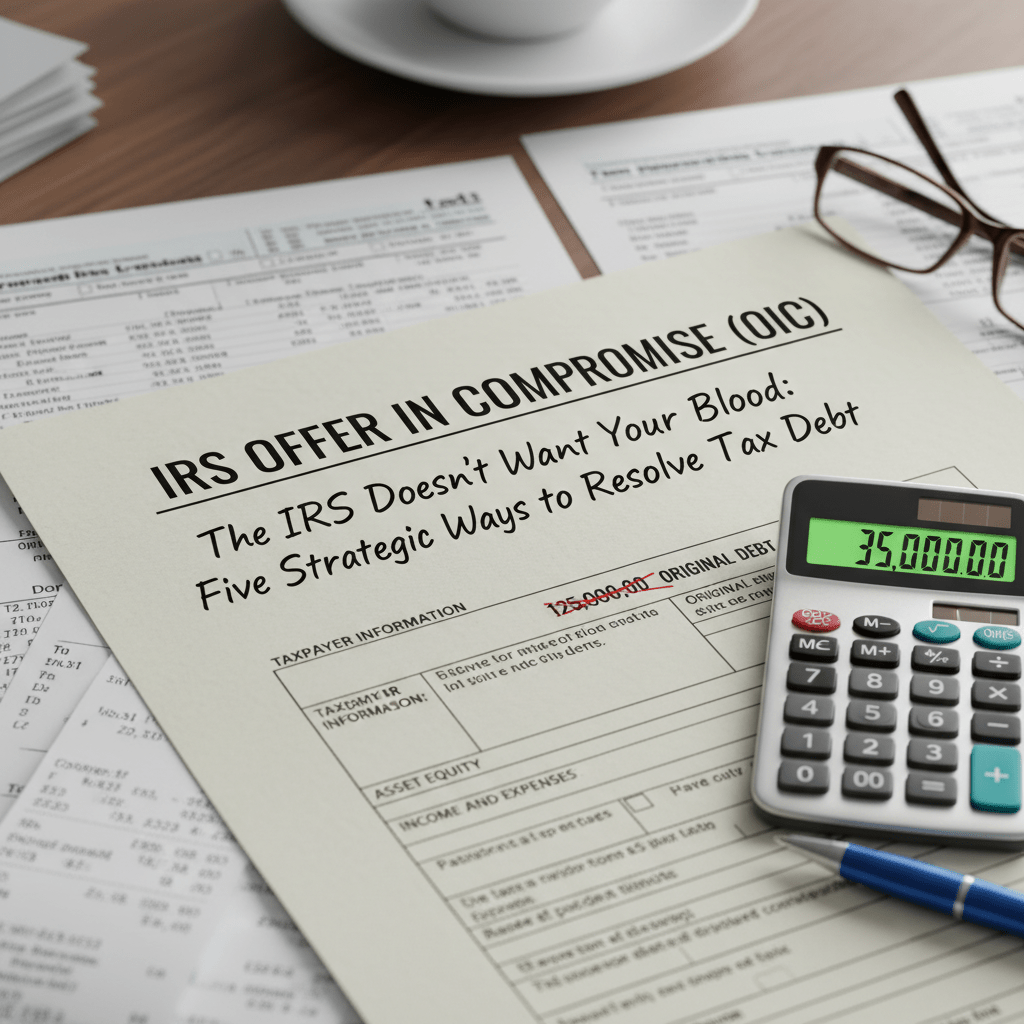
4. Offer in Compromise (OIC)
The Offer in Compromise represents the dream scenario for many indebted taxpayers: settling the liability for a lower amount than is actually owed. The IRS will consider an OIC only if it believes the amount offered is the most it can expect to collect within a reasonable time frame. The agency evaluates a taxpayer’s “Reasonable Collection Potential,” which is essentially a calculation of their assets and future income.
An OIC is a legitimate option if you are facing significant financial distress and cannot pay your full tax liability. However, it is not a simple form. The application process is rigorous, requiring detailed financial disclosures, and the IRS only accepts offers for one of three reasons: doubt as to collectability, doubt as to liability, or effective tax administration (due to economic hardship). The acceptance rate is low compared to installment agreements, making professional guidance highly recommended for this complex strategy.
5. Currently Not Collectible (CNC) Status
For individuals experiencing severe financial hardship, there is a mechanism for temporary reprieve: the Currently Not Collectible status. If the IRS agrees that paying your tax debt would prevent you from meeting your basic living expenses, it may temporarily halt collection efforts. This is not forgiveness; it is a pause button. Interest and penalties continue to accrue, and the statute of limitations for collection is suspended, but active collection attempts are stopped.
To qualify for CNC, a taxpayer must provide extensive documentation demonstrating their financial inability to pay without significant hardship. The IRS reviews these accounts periodically, meaning a taxpayer’s finances are subject to ongoing scrutiny. CNC is a last resort, but it offers a critical period of relief to stabilize one’s finances before returning to a more permanent resolution, such as an installment agreement.
The Investor’s Mindset
Resolving tax debt, regardless of the cause, is a fiduciary act. The same clear-eyed, analytical thinking you apply to an investment portfolio must be applied to your IRS liability. Do not wait for a levy notice or a lien. Assess your financial reality, choose the appropriate resolution strategy from these five options, and initiate contact with the IRS or a qualified tax professional immediately. Taking control of tax debt is not just a financial obligation; it is a necessary step toward securing your long-term economic future.
Are you facing tax debt that you’re looking to resolve? Have you tried these techniques and strategies? Comment below – we’d love to hear from you.
Disclaimer: Content does not constitute professional advice (financial, legal, or technical). Always consult qualified professionals before making any decisions.



 Law and Tax magazine
Leave a comment