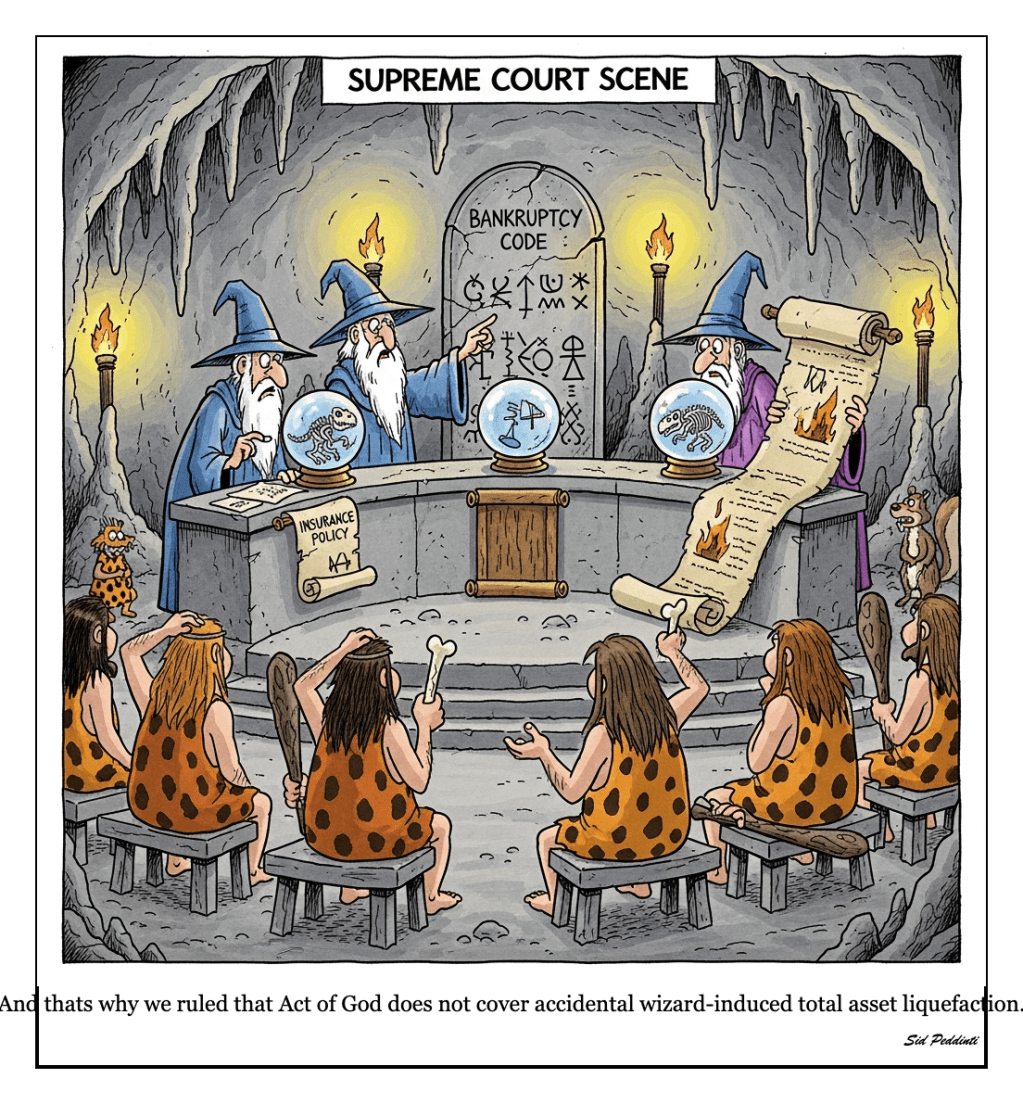
Learn these cases

The Supreme Court Decisions That Quietly Redefined Your Estate Plan
How Five Landmark Cases Control Who Actually Gets Your Money
People assume their Will, trust, or beneficiary form is the final word. The reality is very different.
The Supreme Court has quietly reshaped the rules on inheritance, divorce, retirement accounts, family businesses, and post death legal fixes. Some of these decisions protect families. Others completely devastate them.
These are not abstract legal theories. They decide whether your ex-spouse receives your life insurance, whether your children lose your retirement account in bankruptcy, whether the IRS can ignore a state court order, and whether your small business suddenly owes a massive estate tax bill.
For years I have told clients the same thing: your estate plan is only as strong as the laws that govern it. These five Supreme Court cases are the hidden framework that determines whether your plan works or collapses.
Below is the plain English breakdown.
––––––––––––––––––
Case 1: Sveen v. Melin
The Divorce Beneficiary Trap
A Minnesota couple divorced. Years passed. The husband never changed the beneficiary on his life insurance policy. After he died, his children assumed the money was theirs. His ex-wife stepped in and said the form still listed her, so she should receive the payout.
Minnesota had a revocation on divorce statute which automatically removes an ex-spouse as beneficiary. The Supreme Court upheld the statute. The Court confirmed that states have the power to rewrite beneficiary outcomes after a divorce unless the policyholder affirmatively re designates the ex spouse.
This case dismantles the idea that your original paperwork is final. |Many people believe the act of filling out a beneficiary form creates a contract that cannot be altered. The Court said that beneficiary rights exist because state law creates them. State law can also modify them.
Key action: If you want your ex spouse to remain beneficiary, you must re sign the form after the divorce. If you want them removed, you must verify that your state’s revocation statute applies and then update the form anyway.
Takeaway: Beneficiary forms control more wealth transfers than Wills. They override your entire estate plan. Divorce makes them legally unstable until you update them.
Authority:
Sveen v. Melin, 138 S. Ct. 1815 (2018)
––––––––––––––––––
Case 2: Clark v. Rameker
The Inherited IRA Creditor Nightmare
You work your entire life building retirement savings protected from creditors. When you die, your spouse rolls it over and keeps the protection. Your child inherits it and loses every layer of protection instantly.
Before this ruling, courts were split on whether inherited IRAs were “retirement funds” and shielded in bankruptcy. The Supreme Court ruled unanimously that inherited IRAs are not retirement funds. A child can withdraw every dollar immediately. There is no intent to save for their retirement. Because the funds are freely accessible, they are exposed to creditors.
I have seen this play out in real cases. A client’s adult child inherited a sizable IRA. Months later, the child was sued for an auto accident. The creditor took the entire inherited retirement account. This case explains why.
Key action: Do not leave large IRAs directly to children. Use a properly drafted see through trust (also called a conduit trust or IRA inheritance trust).
It satisfies IRS distribution rules while protecting the principal from creditors, lawsuits, divorce, and bankruptcy.
Takeaway:
Your IRA is protected while you are alive.
Your spouse’s inherited IRA is protected.
Your children’s inherited IRA is exposed.
Authority:
Clark v. Rameker, 573 U.S. 122 (2014)
––––––––––––––––––
Case 3: Obergefell v. Hodges
How Marriage Equality Reshaped Estate Planning
This case legally recognized same sex marriage across the entire United States. For estate planning, the impact is enormous.
Federal and state inheritance laws revolve around one word: spouse. Before this ruling, same sex couples had patchwork recognition depending on the state. The unlimited marital deduction, portability, spousal share protections, elective share rights, and federal benefits were inconsistent.
After Obergefell, every married couple receives full recognition nationwide. Estate taxes, portability, IRA rollovers, and intestacy protections now apply uniformly.
Key action: Married couples must still create a Will or trust, but Obergefell ensures that spousal rights are consistent across state lines.
Takeaway: The ruling standardized the core tax and inheritance protections for all married couples.
Authority:
Obergefell v. Hodges, 576 U.S. 644 (2015)
––––––––––––––––––
Case 4: Connelly v. United States
The Tax Shock Hiding in Buy Sell Agreements
This 2024 decision hit closely held business owners by surprise. Many family businesses use company owned life insurance to fund buy outs when an owner dies. Historically, owners believed that insurance proceeds used to redeem a deceased owner’s stock should not increase the value of the company for estate tax purposes.
The estate in Connelly argued that the insurance was a wash. The company receives insurance proceeds and immediately uses them to buy back shares. The Supreme Court rejected this argument. The Court ruled that the insurance payout increases the fair market value of the business. The deceased owner’s interest is then taxed on that inflated value.
This creates a real liquidity crisis. I have seen businesses scramble to sell assets or borrow heavily because insurance that was supposed to make succession smooth instead triggered an unexpected federal tax bill.
Key action: Review every buy sell agreement immediately. Company owned policies are now dangerous for estate tax purposes. Consider cross purchase agreements or insurance owned by a separate trust to keep insurance proceeds outside the corporation’s taxable value.
Takeaway: Connelly rewrote valuation standards for family businesses and exposed owners to large estate tax liabilities they never expected.
Authority:
Connelly v. United States, 601 U.S. ___ (2024)
––––––––––––––––––
Case 5: Commissioner v. Estate of Bosch
When the IRS Can Ignore Your State Court Judge
This older case remains one of the most powerful tax decisions of the past century. Often families attempt to fix mistakes in a Will or trust after someone dies. A local probate judge approves the correction. Everyone thinks the issue is resolved.
Bosch says otherwise.
The Supreme Court held that the IRS is only bound by rulings of a state’s highest court. Lower court orders, probate court corrections, or local reforms are not binding in federal estate tax analysis.
This means the IRS can reject a probate court’s ruling if it helps the estate reduce taxes. I have seen families obtain a favorable state court order only for the IRS to completely disregard it and impose a higher estate tax assessment.
Key action:
Fix mistakes during life.
Do not assume a post death correction by a local judge will influence federal tax treatment.
Tax is a federal matter that can overrule a state ruling.
Takeaway: Local court orders cannot override federal tax authority unless they reflect the state’s highest court interpretation.
Authority:
Commissioner v. Estate of Bosch, 387 U.S. 456 (1967)
––––––––––––––––––
Closing Thoughts
These cases show the same pattern:
Doing nothing is the most expensive strategy.
Beneficiary forms go stale.
Laws shift.
Business valuations change.
Fixes made in the wrong court are ignored.
The Supreme Court decisions above control whether your wealth transfers smoothly or collapses under taxes, creditor exposure, or probate chaos.
If any of these situations apply to you, your plan may already be outdated.
––––––––––––––––––
Optional AI Tools and Next Steps
We built our estate and tax AI tools for these exact problems. That includes:
• The Retirement and Inherited IRA Exposure Scanner
• The Probate and Estate Tax Projection Calculator
• The Business Valuation and Buy Sell Risk Analyzer
• The Trust Compliance and Structure Review Engine
• The Portfolio Visualization Tool for Trusts and Foundations
These tools were designed and tested with support from Google’s AI development team. They are built for business owners, families, and professionals who want clarity without the complexity.
We have a national team of attorneys, CPAs, and advisors who offer a free pro bono session. We will run your documents, entities, or beneficiary designations through the scanners and show you the gaps. There is no obligation to hire us. We are still pressure testing these systems and gathering data.
If you want clarity, you can request a private review session – head over to the Free Law & Tax Hotline™ Tab.
That’s it for now – talk soon,
Sid Peddinti, Esq.
––––––––––––––––––
Disclaimer
This article is educational. It is not legal, tax, financial, or investment advice. Results depend on each person’s unique circumstances. Consult your own advisors before relying on any strategy.
Topics:
#EstatePlanning
#SupremeCourt
#RetirementAccounts
#BusinessSuccession
#ProbateAwareness
#TaxLaw
#InheritancePlanning
#WillAndTrust



 Law and Tax magazine
Leave a comment