
Explore how a private foundation works and how it can benefit your family & society
The New Wealth Architecture: Why Private Foundations Are Becoming Essential for High-Net-Worth Families
In recent years, I have watched a quiet movement unfold among entrepreneurs, real estate investors, physicians, business owners, and families who have accumulated significant wealth. More of them are turning to private foundations, not just for generosity but for structure, philosophy, tax strategy, and long-term legacy.
This is not a trend. It is a shift in how families think about wealth.
I first understood the power of private foundations when I worked with a business owner who transferred highly appreciated assets into a foundation, eliminated capital gains tax on the transfer, created a tax deduction for the contribution, and then continued investing those assets inside the foundation.
He reduced his taxes, protected his estate, built a multi-generational mission, and aligned his values with his financial plan. I have never forgotten that case. It reshaped my approach to planning.
That was a “career-shaping” move that injected me into the world of strategic philanthropy roughly 15 years ago. Private foundations are not only philanthropic vehicles. They are strategic, tactical, hybrid entities that can be bolted on to virtually business or estate plan to strengthen it.
Why Families Are Turning to Foundations
Families are using foundations because they want:
• Relief from estate and gift tax exposure
• Asset protection
• Control over charitable direction
• Investment flexibility
• Multi-generational governance
• A family identity that outlives them
• Tax deductions up to 30 percent of adjusted gross income
• Corporate deductions up to 10 percent of taxable income
Families are realizing that philanthropy can also reinforce financial strength.
The Investment Capabilities Most People Overlook
A private foundation can:
• Own real estate
• Maintain investment portfolios
• Hold appreciated assets
• Receive capital from asset sales
• Invest in mission-aligned companies
• Make grants to qualified organizations
• Employ staff for charitable programs
This gives families the ability to convert wealth into impact without losing control of the strategy.
Where Foundations Fail
Foundations collapse when they violate the Internal Revenue Code. The IRS is strict but fair. The rules are clear.
Common compliance failures include:
• Self-dealing under Section 4941
• Not meeting the 5 percent distribution rule under Section 4942
• Excess business holdings under Section 4943
• Taxable expenditures under Section 4945
• Incorrect governing documents
• Related-party transactions
• Poor recordkeeping
I have seen foundations lose tax-exempt status because no one paid attention to these sections. It is avoidable if the foundation is structured with care.
What a Strong Foundation Looks Like
A strong foundation has:
• Clear mission and governing instruments
• Clean investment policy
• Board training for family members
• Annual compliance reviews
• Accurate filings (Form 990-PF)
• Documentation for grants
• Policies to avoid related-party issues
This is how families build something that can survive for generations.
The Multi-Generational Impact
Foundations give families something they often struggle to create: permanence. Trusts eventually terminate. Businesses eventually sell. Real estate eventually transfers. A foundation, if managed properly, can continue indefinitely.
It becomes the family’s voice, purpose, and public contribution.
Closing Insight
Private foundations are not only tax-efficient structures. They are philosophical structures. They help families build both a financial legacy and a social one. They reinforce values. They strengthen unity. They allow wealth to serve a purpose beyond accumulation.
How AI Helps Families Structure, Analyze, and Maintain Private Foundations
Private foundations require structure, documentation, compliance, alignment with IRS rules, and a mission that survives beyond the founder.
For years, I watched clients struggle with these components. Most were operating with incomplete information, inconsistent forms, outdated documents, or uncertainty around IRS restrictions.
So we built tools that bring order to the complexity.
Working with Google’s AI development team, we are developing a suite of AI Legal Tech Tools such as:
• The Private Foundation Compliance Analyzer
• The Self-Dealing Rule Checker
• The 4942 Distribution Calculator
• The Foundation Investment Alignment Tool
• The Multi-Generational Governance Planning Model
These tools are designed to help founders avoid the five major failure points that collapse foundations: poor structure, bad documentation, unrelated investments, related-party issues, and IRS compliance gaps.
The goal is not automation.
The goal is accuracy, clarity, and long-term stability.
A Pro Bono Foundation Review Session, If You Want Clarity
We partnered with attorneys, CPAs, and foundation advisors across the United States to offer a free review session for families considering a foundation or maintaining an existing one.
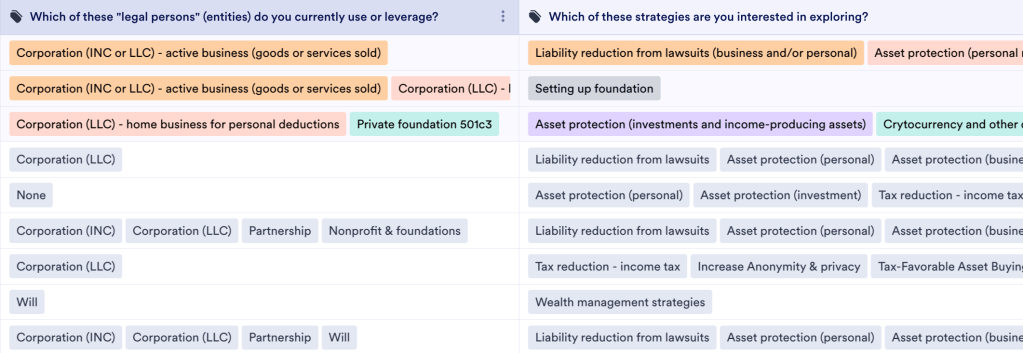
We run your documents, mission alignment, tax exposure, compliance requirements, and governance structure through our AI models. Below is one example of an estate and tax evaluation tool that can help you get total clarity on each legal, tax, and financial strategy you can considering – it’s all about planning.

There is no obligation to work with us or retain anyone.
We built these tools to help families avoid the silent failures that can jeopardize charitable structures and legacy-building.
You deserve clarity before you commit to something as meaningful and long-lasting as a private foundation.
Schedule a call on the Law & Tax Hotline™ – we’ll help you get in touch with someone who can educate, empower, and implement these strategies for you.
That’s it for me – thanks for reading.
Talk soon,
Sid Peddinti, Esq.
Inventor, AI Innovator, and IP & Tax Lawyer
Resources
• My Forbes Council Article On Foundations: https://www.irs.gov/businesses/small-businesses-self-employed/estate-tax
• IRS Private Foundations Rules Overview: https://www.irs.gov/charities-non-profits/private-foundations
• Internal Revenue Code Sections 4940–4945: https://www.law.cornell.edu/uscode/text/26/subtitle-D/chapter-42
• IRS Publication 578: https://www.irs.gov/pub/irs-pdf/p578.pdf
• IRS Form 990-PF Instructions: https://www.irs.gov/forms-pubs/about-form-990-pf
• Estate and Gift Tax Overview (IRS): https://www.irs.gov/businesses/small-businesses-self-employed/estate-tax
Disclaimer
This article is for educational purposes only and does not constitute legal, financial, or tax advice.
Relevant topics
#PrivateFoundations #EstatePlanning #WealthStrategy #TaxPlanning #Philanthropy #FamilyLegacy #CharitableGiving #LawAndTaxMagazine



 Law and Tax magazine
Leave a comment