
5 Trending Corporate Careers In AI
Written by Sid peddinti
You’ve heard the buzz: AI is taking over everything. But forget the robots and the coding classes – what does this actually mean for your next big corporate career move?
It means a massive surge in high-paying, high-impact jobs that are less about complex math and more about strategy, business sense, and understanding people.
If you want to be the person running the AI show, not just writing the code for it, these are the five fastest ways to the top. This is the new corporate power structure.
5 Corporate Careers That Let You Run the AI World
1. The AI Product Manager: The CEO of the Machine
What This Job Really Is: Think of the AI Product Manager (AI PM) as the person who decides what problem the AI system should solve and how the final tool should look and feel to a normal customer. They are the critical bridge between the high-level business goals and the technical team building the models.
The Corporate Value: They are the profit center. An AI PM makes sure the company isn’t just building cool tech, but is building tech that people will actually use and pay for. They translate “we need to be cutting-edge” into “we need a tool that reduces customer service time by 30%.”
Key Action: Think Business First: If you’re already a Product Manager for traditional software, you are halfway there. You need to stop thinking about features and start thinking about data. What data do you need? Is it ethical? Is it even available?
SEO Layman Keywords: AI product design, AI business strategy, managing AI features, AI user experience.
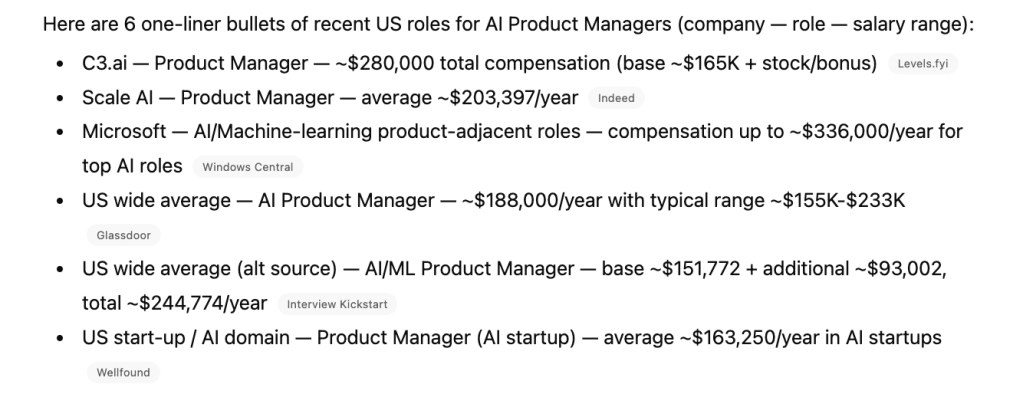
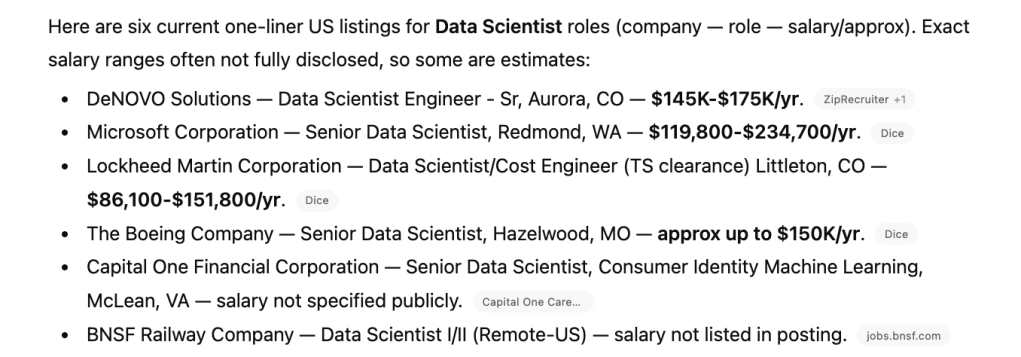
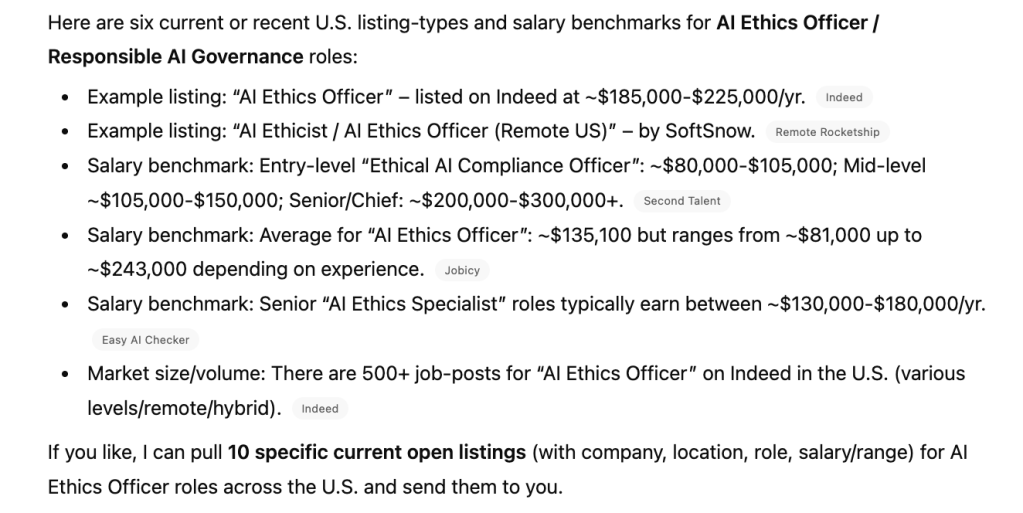
Here’s a list that I pulled up today – November 11, 2025 – from ChatGPT. This should give you an idea of the salary and compensation range for this role.
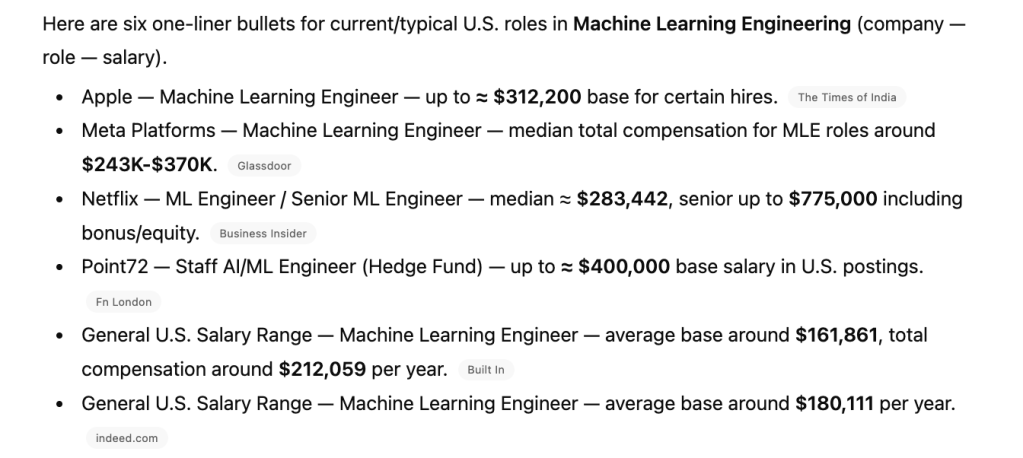
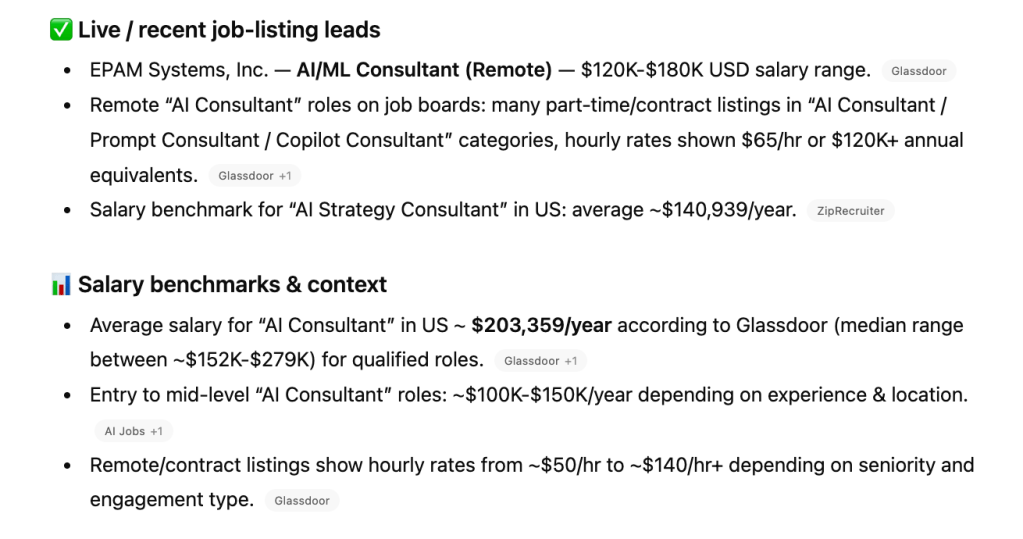
Please note: I’m not posting this on here for to go apply to these jobs – but to demonstrate the compensation range. There is a good change that these jobs might not be actively listed or already filled when you read this article. That goes with the rest of the images included in this article.
2. The Machine Learning Engineer: The Builder Who Trains the Brain
What This Job Really Is: This is the core technical role. The Machine Learning (ML) Engineer is the specialized coder who takes all the cleaned-up data and uses it to build the actual ‘brain’—the algorithms—that can learn and make predictions. They build the recommendation system that suggests your next purchase or the fraud detection engine that catches suspicious transactions.
The Corporate Value: They are the execution engine. Without them, the AI dream stays a PowerPoint slide. They are responsible for making sure the AI system is not only smart but also runs smoothly and reliably inside the company’s existing technology stack, catching real-world problems like spam or system failure.
Key Action: Focus on Production: It’s not enough to build a cool model in a sandbox; you have to get it to work 24/7 with real users. This role demands serious coding skills, but the corporate impact is measured in reliability and scale.
SEO Layman Keywords: building AI models, AI programming, deploying machine learning, AI automation.
3. The AI Consultant: The Advisor Who Shows Companies the Money
What This Job Really Is: AI Consultants are hired guns. They are outside experts brought in to look at a company’s entire operation and tell them exactly where and how to use AI to save money, increase sales, or streamline an outdated process. They don’t usually build the system themselves; they draw the blueprint for it.
The Corporate Value: They are the strategy catalyst. Companies pay huge amounts for their advice because they bridge the gap between “I know AI is important” and “I need a 5-year plan to implement AI.” They have seen what worked and what failed at 20 different companies and bring that wisdom to your corner office.
Key Action: Master Your Industry: The best AI Consultants are less AI experts and more experts in a specific field (like finance, retail, or healthcare) who also happen to speak the language of AI. Your domain knowledge is the real commodity here.
SEO Layman Keywords: AI business strategy, AI implementation plan, AI corporate advice, AI transformation.
4. The Data Scientist: The Detective Finding Hidden Patterns
What This Job Really Is: This is the detective of the corporate world. A Data Scientist is responsible for sifting through massive amounts of raw company data—from spreadsheets to server logs—to find hidden connections and insights that no human could see. They use this information to build predictive models that answer big questions: Which customers are about to leave? Which marketing campaign will actually work?
The Corporate Value: They are the intelligence core. They extract the gold from the company’s biggest asset (its data) to help leaders make smarter, data-driven decisions. They don’t just report what happened; they build the models that predict what will happen.
Key Action: Learn to Tell a Story: A Data Scientist is useless if they can’t clearly explain a complex insight to a non-technical CEO. You need to translate statistical jargon into a simple, compelling story about money, risk, and opportunity.
SEO Layman Keywords: predictive modeling, business intelligence, data analysis for AI, finding patterns in data.
5. The AI Ethics Officer: The Guardrail for Fairness and Trust
What This Job Really Is: This is arguably the most crucial new corporate role. The AI Ethics Officer is the company’s internal lawyer, philosopher, and risk manager all rolled into one. They ensure that all AI systems are compliant with new laws, don’t discriminate against certain groups of people, and are aligned with the company’s core values and public trust. They stop the company from creating a PR disaster or getting hit with huge fines.
The Corporate Value: They are the risk manager and trust builder. As AI systems touch more sensitive areas (like hiring, lending, or healthcare), the Ethics Officer’s job is to ensure the AI is fair, transparent, and explainable, protecting the company’s reputation and bottom line.
Key Action: Develop a Policy Mindset: This role thrives on strong communication, policy writing, legal knowledge, and an understanding of societal risk. It’s perfect for people coming from compliance, HR, or legal fields who want to pivot to the future.
SEO Layman Keywords: responsible AI, AI compliance, AI bias detection, AI legal risk.
The reality is, the corporate AI space needs business minds, strategists, and ethicists far more than it just needs more coders. The money is moving to the people who can decide what to build and why.
Which of these five roles sounds like the most satisfying pivot for your current career? OR do you already perform a combination of these roles in a private setting – but now you know corporations might actually hire you as well?
This is just the start of the AI Revolution – we’re going to see all sorts of jobs and roles evolve over the next decade or so – it’s a good time to understand what your current skills and talents are worth in the corporate setting. Maybe you’re better off in a corporation versus running a business?
Let us know in the comments!
If you want to speak to one of our team members who are currently in these roles – we’d love to make that happen for you – let me know.
Thanks for reading,
Sid Peddinti, Esq.
This article is for informational purposes only and is not career advice. Salaries and job market demands can vary significantly based on location, company size, and specific skill set. Always research current market rates and educational pathways before making a career change.
#AIcareers #CorporateJobs #FutureOfWork #AIProductManager #DataScience #HighPayingJobs #AIEthics


 Law and Tax Magazine
Leave a comment