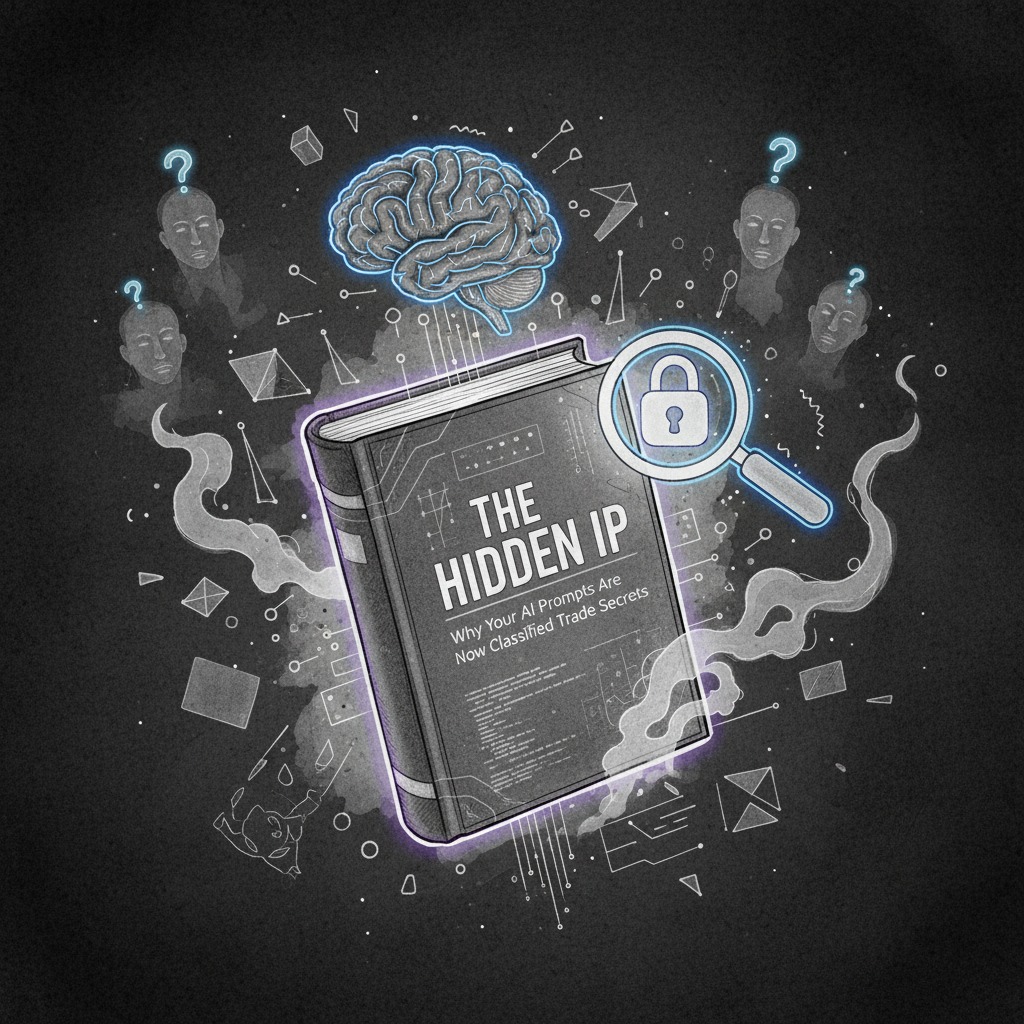

Discover how to turn your prompts into intellectual property that can be monetized in unique ways
The generative AI boom has opened vast copyright ambiguities, but corporations are quickly realizing that while the output may be hard to protect, the process of creation is often their most valuable asset.
The legal architecture protecting this process is not copyright, but the often-overlooked doctrine of Trade Secrets. This shift fundamentally redefines ownership, emphasizing the meticulous human input required to guide the algorithm.
1. The Prompt as Proprietary Input
In many sophisticated AI workflows, the ‘secret sauce’ is not the final image or text, but the highly refined prompt engineering that produces it. These complex input queries, often built over months of refinement and testing, provide a distinct economic advantage and are rigorously protected under non-disclosure agreements and internal policies as critical trade secrets.
2. The Economic Value Requirement
Trade secret law protects information that derives independent economic value from not being generally known. A company’s specific AI workflow, the parameters used, and the methods for achieving a specific quality output all qualify because they give the owner a competitive edge against rivals who must spend resources figuring out the process themselves.
3. The Data Curation Secret
While the underlying AI model might be public or licensed, the specific proprietary dataset used for fine-tuning—or the curated data pipelines feeding continuous learning—are almost always protected. This curated data, representing significant investment and selection bias, is a classic example of protected intellectual property, regardless of the output’s copyright status.
4. Reasonable Security Measures
For information to qualify as a trade secret, the owner must demonstrate they have taken ‘reasonable steps’ to keep it secret. This means robust digital security, access restrictions to prompting environments, and comprehensive employee training, cementing the proprietary nature of the creation process.
5. The Power of Your Thoughts and Ideas
AI acts as an advanced tool, but it is the human intent—the strategic decisions, the iterative feedback, and the vision to refine the output—that fuels the economic value. This vital element represents the power of your thoughts and ideas translated into actionable, proprietary workflows that a competitor cannot easily replicate without unlawful acquisition.
6. The Distinction from Copyright
In jurisdictions like the U.S., purely AI-generated works lack human authorship and are often denied copyright protection. However, trade secret law focuses not on the authorship of the final piece, but on the confidentiality of the methods used to achieve it, offering a parallel, equally robust shield for commercial viability.
7. Protecting the ‘Negative Knowledge’
Trade secret status also protects ‘negative knowledge’—the records of failed attempts, ineffective prompts, and dead-end avenues that the company paid to discover. Knowing what not to do is immensely valuable and prevents competitors from wasting resources, solidifying the entire experimental process as a protected business asset.
NEXT STEPS:
You are now in the era where your “words” can become highly valuable intellectual property that you can monetize in several ways – from licensing it, transforming into a code (Vibe Coding), creating joint ventures partnerships, and even full blown turn-key businesses – all by learning HOW to prompt.
Want to watch how we turn “words” into “apps” that are licensed in the marketplace right now?
Attend a FREE Build IP with AI™ Workshop – link in the menu.
Talk soon,
Sid Peddinti, Esq.
IP Lawyer, AI Architect, and Vibe Coder
#AIMarketing #vibecoding #howtouseatlas #chatgpt #gemini #prompts


 Law and Tax magazine
Leave a comment