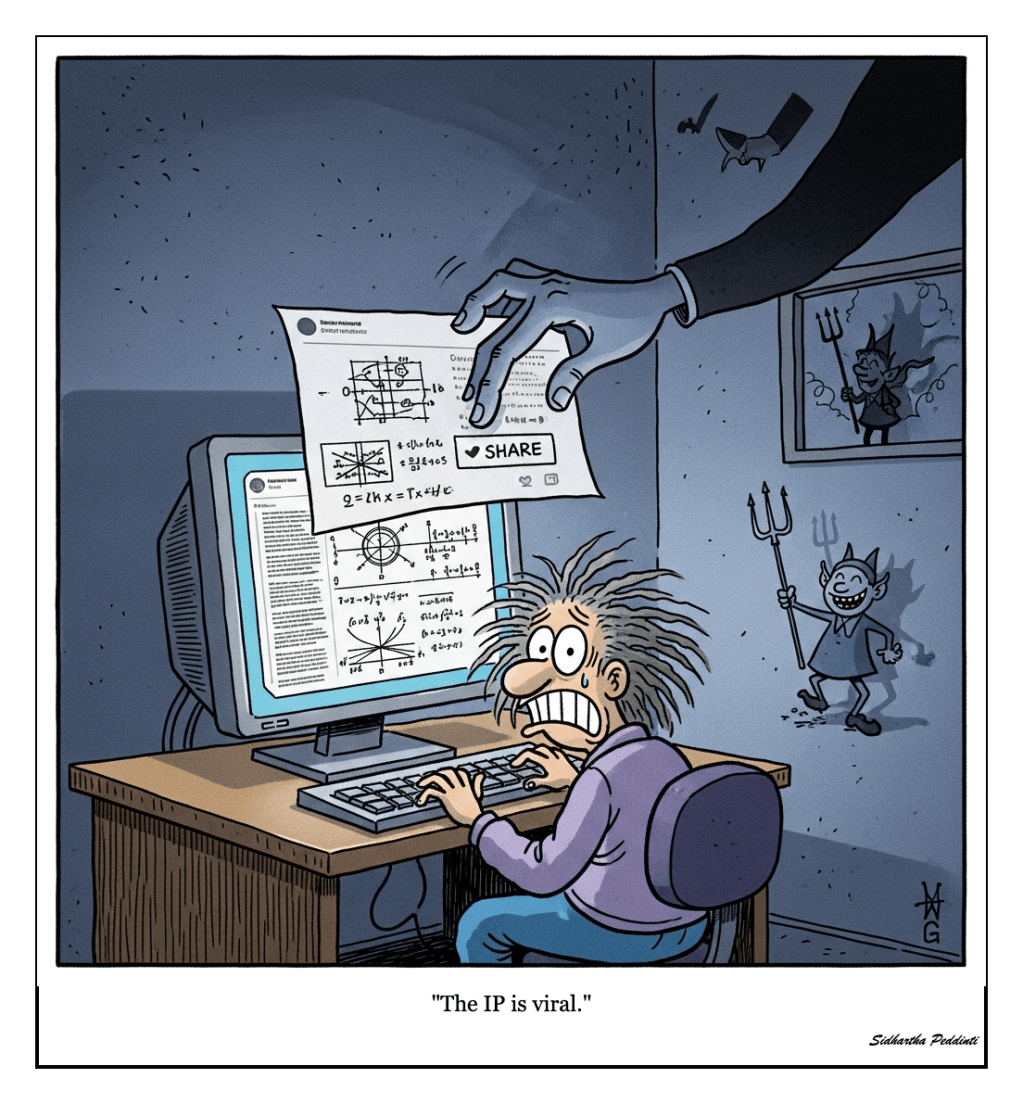
And Why Posting Your Best Ideas Online Might Be the Most Expensive Mistake of Your Career…
By: Sid Peddinti, Esq.

Most founders, creators, entrepreneurs, influencers – and yes, even lawyers – misunderstand the true nature of their intellectual property.
They think IP means trademarks, copyrights, patents.
But those are formal protections.
Your real IP is bigger. Much bigger.
Your ideas.
Your frameworks.
Your content.
Your blueprints.
Your concepts.
Your methodologies.
Your creative work.
Your business models.
Your unique insights.
Every post.
Every article.
Every diagram.
Every strategy you casually drop into a Reel or a caption.
That’s ALL intellectual property.
And almost everyone is building it on someone else’s land – namely, social media platforms that exist for one purpose:
To extract, monetize, algorithmically distribute, and repurpose your ideas for their own commercial benefit.
And I’m not speaking theoretically.
I’m speaking from experience – and from the scars of losing a tech company because of a single article I wrote.
Let’s break this down properly.
THE HUGE PROBLEM NO ONE TALKS ABOUT
Creators proudly push original IP onto:
- TikTok
- Medium
- YouTube
- Online magazines
- Digital publications
…hoping it might land a client or boost credibility.
I get it.
I did the same thing.
In fact, one major publication once paid me $1,000 for an article featuring one of my legal-tech ideas.
I was thrilled.
Until I learned the truth:
By publishing original ideas on someone else’s platform, you are voluntarily giving them the legal right to:
- Use your content however they want
- Sublicense it to third parties
- Modify it
- Distribute it
- Monetize it
- Create derivative products from it
- Build a software or entire business around your idea
- Keep doing all of the above even if you delete the post
Yes, you read that correctly.
And yes – this is written plainly in the terms you already agreed to.
THE MOST MISLEADING LINE IN SOCIAL MEDIA HISTORY
Every platform tells you:
“You retain ownership of your intellectual property.”
Creators take a deep breath.
They feel safe.
But then comes the next line – the one nobody reads:
“…but by posting, you grant us a worldwide, royalty-free, transferable, sublicensable license to use, host, modify, distribute, publicly display, and create derivative works from your content.”
Translated into plain English:
You own the IP –
but we own all the power over it.
That’s the legal equivalent of a death sentence for your competitive advantage.
Because once you grant a transferable, sublicensable license, your idea is no longer yours alone.
Anyone they license it to can use it.
Anyone who obtains data from the platform can analyze it.
AI training sets can absorb it.
Tech firms can commercialize it.
And you can’t do a thing about it.
HOW I LEARNED THIS THE HARD WAY
A few years ago, I published a detailed legal-tech framework in a large digital magazine.
It went viral.
It attracted attention.
It attracted corporations.
Or so I thought.
Behind the scenes, the publication partnered with a tech firm.
They used the blueprint from my article.
They built the software based on my concept.
They ran ads on the article to drive traffic into their product — not mine.
They made millions.
I made $1,000.
And I lost a company.
Not because I wasn’t smart.
Not because I didn’t have lawyers.
Not because the idea wasn’t protected.
But because I published it in someone else’s publication first.
My biggest mistake wasn’t the idea.
It was the location.
IF YOU THINK THIS CAN’T HAPPEN TO YOU… LOOK AT THESE CELEBRITIES
Even celebrities with armies of lawyers lose IP control:
1. Taylor Swift — Lost the Masters to Her First Six Albums
Big Machine Records sold the masters to Scooter Braun.
She owned the songs — but not the recordings.
2. The Beach Boys — Sold Control of Their Entire Brand & Catalog
Their likeness, name, and sound were monetized under someone else’s terms.
3. Rihanna — Lost Control Over Her Image on Merchandise
Topshop sold shirts with her face without permission.
She had to sue.
4. Bruce Willis — Confusion Over Digital Likeness Rights
Reports surfaced that his image was licensed for deepfake/AI use.
5. Quentin Tarantino — Sued for Trying to Sell Pulp Fiction NFTs
Miramax claimed ownership despite Tarantino writing the script.
6. Bela Lugosi — His Estate Lost Rights Over His Own Likeness
Universal controlled Dracula merchandise, not his heirs.
If THEY can lose control…
Imagine what can happen to the founder who posts their entire business model into a LinkedIn carousel.
THE TRUTH MOST CREATORS NEVER HEAR
Your ideas, insights, strategies, frameworks – these are NOT “content.”
These are assets.
Your Instagram feed is not a marketing strategy.
It is a leak.
Every time you post an original idea online, you are:
- Reducing its future value
- Exposing it to competitors
- Granting a huge corporation rights to it
- Diminishing its exclusivity
- Undermining potential licensing deals
- Potentially destroying what could become a multi-million-dollar product
Even this post is a risk.
**SO WHAT’S THE FIX?
THE MOST IMPORTANT RULE OF MODERN IP PROTECTION**
**Publish on YOUR platform first.
THEN distribute strategically.**
Your magazine.
Your website.
Your portal.
Your ecosystem.
Your digital publication.
When YOU publish first:
- You hold the first-publisher rights
- You retain control
- You set the terms
- You control licensing
- You control sublicensing
- You own the master copy
- You own the timestamp
- You protect future monetization
- You turn your ideas into assets — not posts
Social media and even large publications ARE NOT a home.
They are distribution channels.
Use it. Don’t let it use you.
THE NEXT ERA: AI-POWERED IP PROTECTION
For years, I used to manually analyze IP structures for:
- Founders
- Creators
- Investors
- Tech companies
- Artists
- Influencers
It took weeks.
Now, I’m releasing AI-Powered IP Tools™, trained on:
- Copyright laws
- Contract laws
- Licensing rules
- Derivative rights
- IP valuation models
- Government regulations
- Platform terms of service
- Case law
- International publication rights
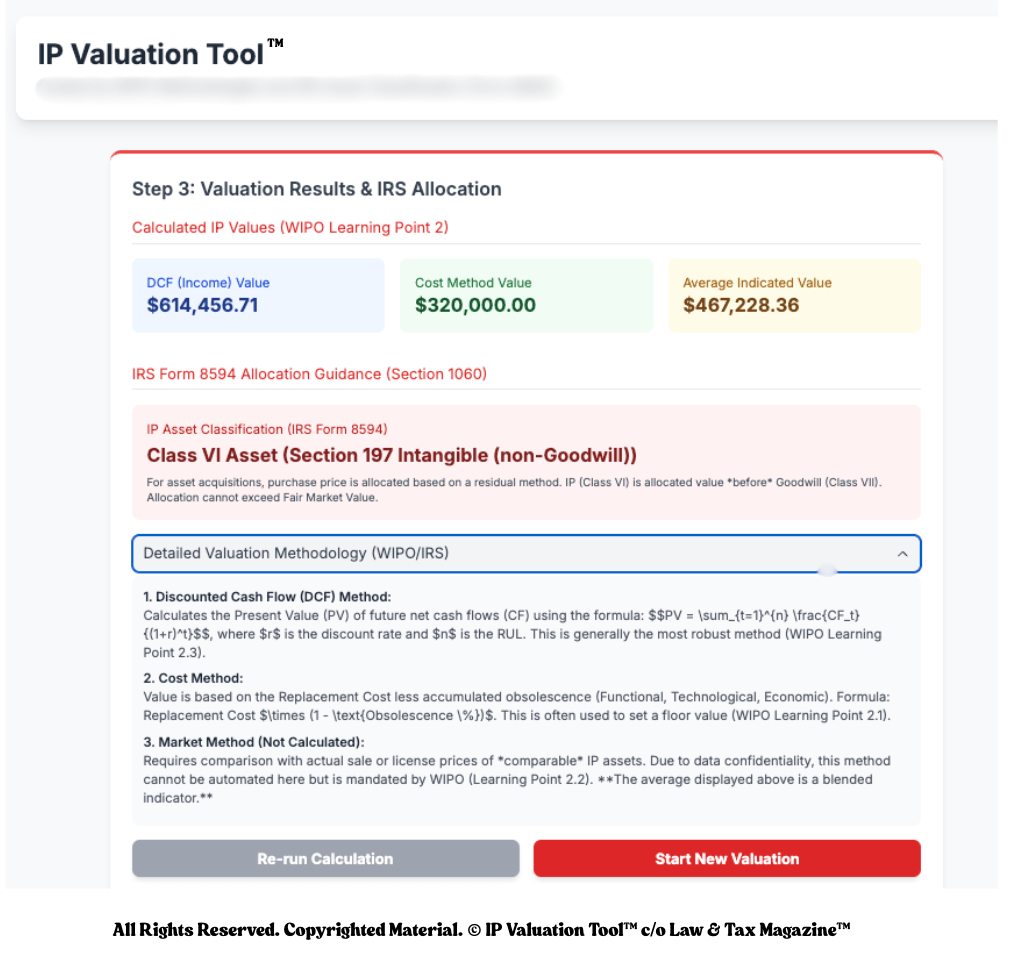
These tools evaluate:
- How vulnerable your IP is
- What platforms already have rights to
- Whether your business model has exposure
- How to reclaim ownership
- How to restructure your IP assets
- How to protect yourself before going viral
And here’s the key:
Every tool is built on ideas FIRST published in my magazine — NOT on social media.
Because once YOU own first publication,
YOU own everything that flows downstream.
FINAL QUESTION FOR YOU
You’re posting every day.
You’re building a brand.
You’re creating.
You’re giving value.
You’re sharing brilliance.
But…
- Have you actually read the Terms & Conditions you agreed to?
- Do you know who owns (or can sublicense) your content right now?
- Do you understand the implications of posting original IP publicly?
- Are you protecting the assets you don’t even realize you’ve built?
If you don’t – it’s time.
Before your best idea becomes someone else’s business.
Check out the more detailed articles that dive deeper into these nuances, including the terms and conditions and the links to the contracts that you have implicitly agreed to when you signed up and starting using social media.
Thanks for reading.
Sid Peddinti, Esq.
Inventor – Attorney – Legal Mythbuster™
No legal, tax, or financial advice contained.
#intellectualproperty #socialmedia #IPlaw #influencer #contentcreator #IPprotection #lawandtax


 Law and Tax magazine
Leave a comment