
Real cases, real people, and real nightmares + How to use AI to avoid them.

The Silent Wealth Killers…
Every year I review hundreds of business files. I look at operating agreements, trust integrations, tax elections, and corporate paperwork.
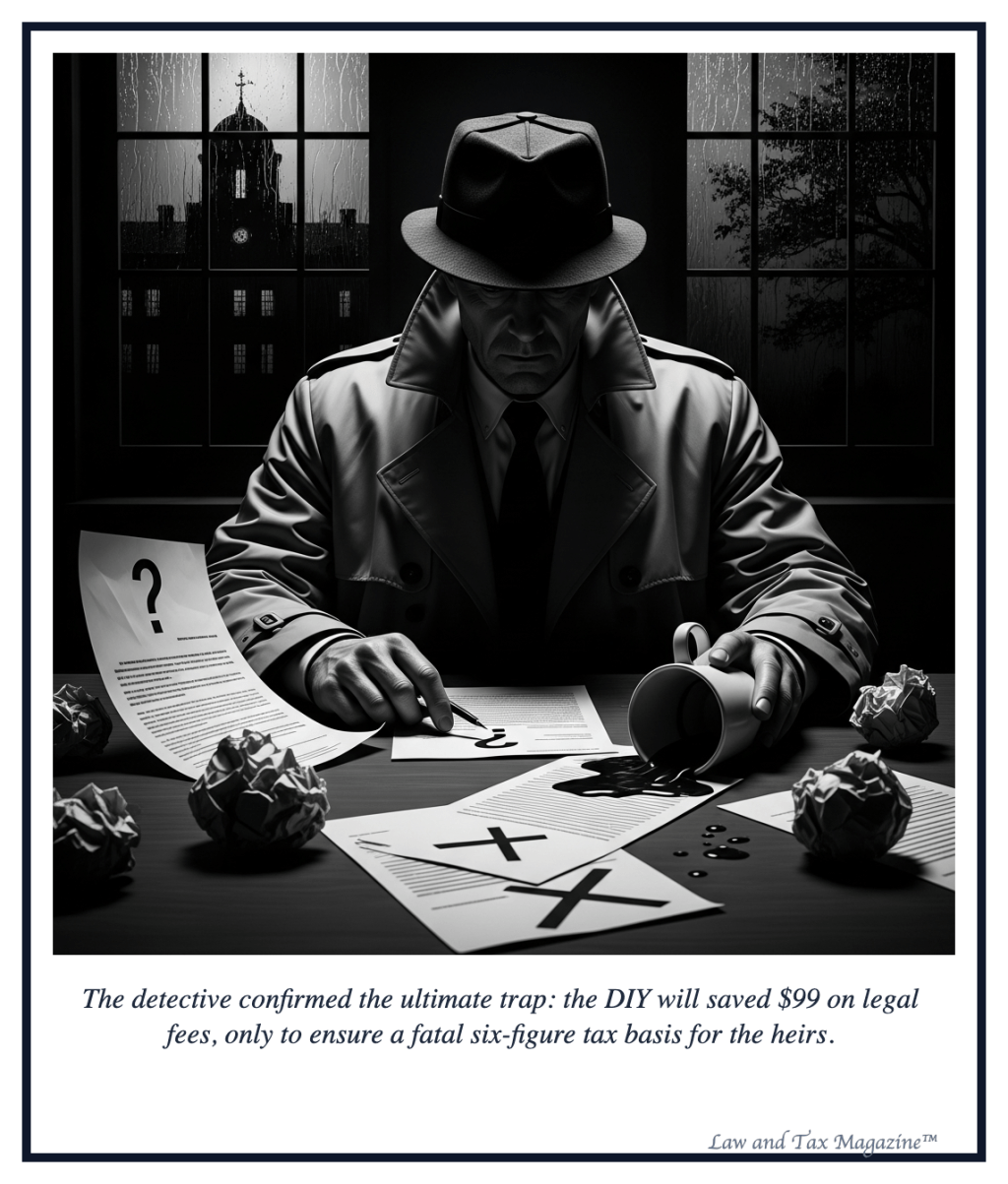
Over time, a pattern becomes impossible to ignore. Most businesses are built on weak legal foundations, and the owners have no idea. The entity looks fine on paper, but the structure contains the same cracks I have watched destroy companies, drain families, and force courts to take control.
I witnessed this most clearly in a case from a few years ago. A business owner proudly told me he had an LLC. He believed he was protected.
He hired an online LLC company to setup the LLC, create the operating documents, and setup the bank account. He ended up in a lawsuit and ended up hiring one of my friends, a Litigator. I was retained to help the business owner fix the gaps and ensure they are operating the right way moving forward.
When he was sued, the court pierced the entity on the first hearing. The judge looked at him and said, “You formed an LLC, but you did not operate one.”
I never forgot those words. They describe exactly why so many entrepreneurs lose everything even though they believe they did the right thing.
The Structural Weaknesses I See Every Week
Here is where entity structures consistently fail:
• No operating agreement or a template that has not been updated
• No corporate minutes or resolutions
• Commingling of personal and business funds
• Ownership percentages that do not reflect economic reality
• Tax elections that contradict long-term plans
• Real estate titled in the individual’s name instead of the company
• Personal guarantees signed without understanding the consequences
• No alignment between business entities and the owner’s estate plan
• Family members inheriting voting rights with no succession plan
These weaknesses are invisible until the wrong moment. Then everything breaks at once.
How Courts Collapse an Entity
Courts care about substance. If they see mixed bank accounts, sloppy records, undocumented decisions, or inconsistent ownership, they treat the business as an extension of the individual.
Creditors suddenly gain access to personal property. Family disputes escalate. In probate scenarios, Probate judges freeze accounts because no one has legal authority to act.
I have seen business owners lose control of companies simply because their documents did not match how they operated. The structure collapsed under basic legal scrutiny.
This is a legal doctrine called “Substance over form” – how you operate (reality) is more important that what your paperwork says (form).
Simply put – if you cannot comply with the rules of the game, you’re disqualified, and the ‘legal protection’ you’re looking for will not exist.
How the IRS Rewrites Your Business Plan
The IRS applies a similar approach. It looks at who controls the money, who benefits, and whether the entity is real from an economic standpoint.
When documents and operations do not match, the IRS can recharacterize income, pull assets back into the owner’s estate under Internal Revenue Code section 2036, disallow deductions, and impose penalties.
A weak entity structure does not survive an audit. The IRS always finds the cracks.
The Probate Court Problem Business Owners Never Expect
If a business owner dies with poorly structured or uncoordinated documents, the entity enters probate. This freezes bank accounts, voting rights, income distributions, and major business decisions. Employees are left in limbo. Clients panic. Business value drops. Probate auctions and liquidations are the only way out.
I have seen thriving companies lose 20 to 40 percent of value during probate simply because no one thought about what happens to the entity the moment the owner is gone.
What Strong Entity Architecture Actually Looks Like
Real protection requires discipline.
A strong structure involves:
• Governing documents that match how the business actually operates
• Clear ownership percentages
• Clean accounting and separation of funds
• Updated tax elections
• Entity alignment with trusts and estate planning
• A written succession plan
• Annual reviews
• Documentation of major decisions
This is not paperwork.
It is law and tax architecture.
When the structure is strong, the business survives stress.
When it is weak, it collapses instantly.
Closing Thoughts
Business owners often think risk comes from the marketplace, competitors, or the economy. Most of the time, the real threat is the structure they built.
The most successful entrepreneurs I work with treat entity planning as seriously as financial planning. They understand that a business is only as strong as its legal foundation.
The AI Solution: How AI Can Clarify Your Entire Business Structure in Minutes
Over the years, I realized most business owners were failing not because they were careless, but because the system was too complex and scattered.
Entity documents live one place. Tax elections live another. Estate plans are separate. Operating agreements contradict bylaws. Beneficiary forms tell a different story.
So started building AI legal and tax tools to fix this.
That’s “my jam” – discovering gaps in my law practice and then building tech tools to fix those gaps in my tech incubators.
Now – we are working in partnership with Google’s AI experts to create some of the most advanced law-and-tax diagnostic tools available to the public.
These include:
• The Business Entity & Tax Structure Scanner™
• The Succession & Probate Risk Analyzer™
• The Estate & Trust Portfolio Visualization Tool™
• The IRC 2036 Exposure Detector™
• Death Tax Calculator™
These tools were designed precisely because of cases like the ones described above. Tools that can detect mismatches, ownership gaps, probate traps, tax vulnerabilities, and operational inconsistencies in minutes.
We created them to help business owners avoid the structural collapses I have watched too many families suffer from.
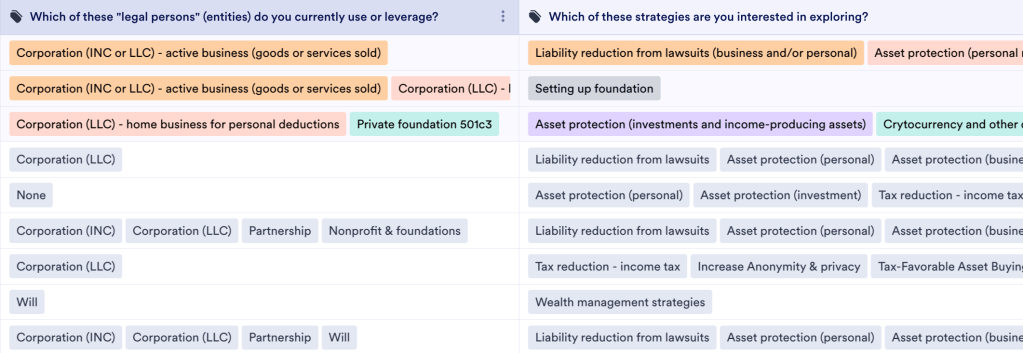
Here is a snapshot of the Estate & Tax Strategic Planning Visualization Tool that we developed to help people gain true clarity around the intersecting worlds of business, estate, real estate, insurance, probate, tax, and investments.

A Pro Bono Clarity Session, With Zero Obligation
We know the system is overwhelming.
We know the stakes are high.
We know one wrong assumption can cost a family everything.
So we assembled a national network of trained attorneys, CPAs, and business-structure advisors who offer a free, pro bono clarity session. We run your business, entity documents, ownership structure, trust alignment, and tax elections through the AI Scanners (like the one above).
There is no obligation to hire anyone. There is no sales pressure of any kind. We are still testing and perfecting these tools, and your participation helps us refine them.
The goal is simple: clarity.
In a world full of noise and misinformation, clarity is the most valuable asset you can have.
Well – that’s it for now. I hope you’ve gained a few insights that you can work on to ensure you’re buttoned up from all sides.
Good luck in your quest. Leave your thoughts below.
Thanks for reading,
Sid Peddinti, Esq.
Inventor, IP & Tax Lawyer, AI Innovator
Sources
• IRS Internal Revenue Code Section 2036: https://www.law.cornell.edu/uscode/text/26/2036
• IRS Internal Revenue Code Section 2053: https://www.law.cornell.edu/uscode/text/26/2053
• State LLC Piercing Standards (Case examples vary by jurisdiction)
• IRS Substance Over Form Doctrine: https://www.irs.gov/irm/part4/irm_04-010-007
• Texas Estates Code Section 256.001: https://statutes.capitol.texas.gov/Docs/ES/htm/ES.256.htm
Disclaimer
This article is for educational purposes only and does not constitute legal, financial, or tax advice. Consult qualified professionals before making decisions.
Relevant topics:
#BusinessLaw #LLCCompliance #TaxStrategy #EstatePlanning #SuccessionPlanning #CorporateLaw #LegalStructure #RiskManagement #LawAndTaxMagazine


 Law and Tax magazine
Leave a comment